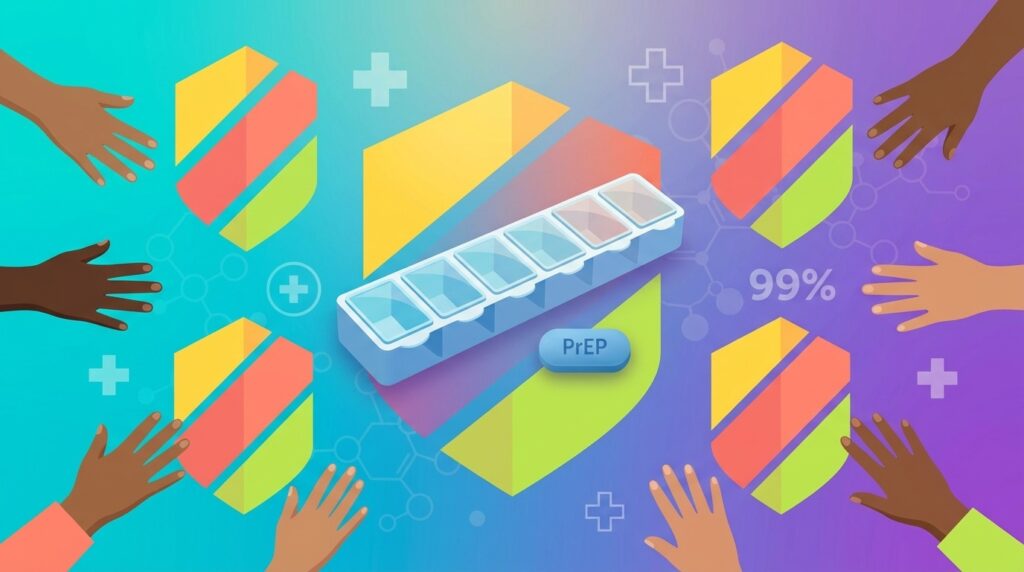
PrEP stands for Pre-Exposure Prophylaxis. It’s a daily medication that reduces the risk of getting HIV from sex by about 99% when taken as prescribed. That’s not a typo. Ninety-nine percent.
Despite that effectiveness, most people who could benefit from PrEP aren’t taking it. The reasons are familiar: lack of awareness, stigma, cost concerns, and not knowing where to start.
Who Should Consider PrEP?
The CDC recommends PrEP for anyone at increased risk of HIV. That includes people who have a sexual partner with HIV, people who don’t consistently use condoms, people who’ve been diagnosed with an STI in the past six months, and people who inject drugs.
PrEP is not just for one group or one gender. It’s a tool for anyone who wants an extra layer of protection.
Addressing Common Concerns
Cost is the question most people ask about first. Here’s the good news: most insurance plans cover PrEP with no out-of-pocket cost. For people without insurance, the manufacturer’s assistance program and state programs can often cover the medication entirely.
Side effects are generally mild. Most people experience no side effects at all. Those who do typically report nausea or headaches that resolve within the first few weeks.
Privacy is another concern. PrEP is prescribed by a regular doctor or clinic. There’s no special designation on your medical records that identifies why you’re taking it.
How to Get Started
Talk to your doctor or visit a community health center. You’ll need an HIV test to confirm you’re negative before starting. After that, it’s a daily pill and routine check-ups every three months.
Five Health has educational resources on PrEP available through our Resources page, including guidance on finding providers in Miami who prescribe it. You can also reach us at info@5-health.com with questions.
| Learn more on our Resources page or ask your doctor about PrEP |