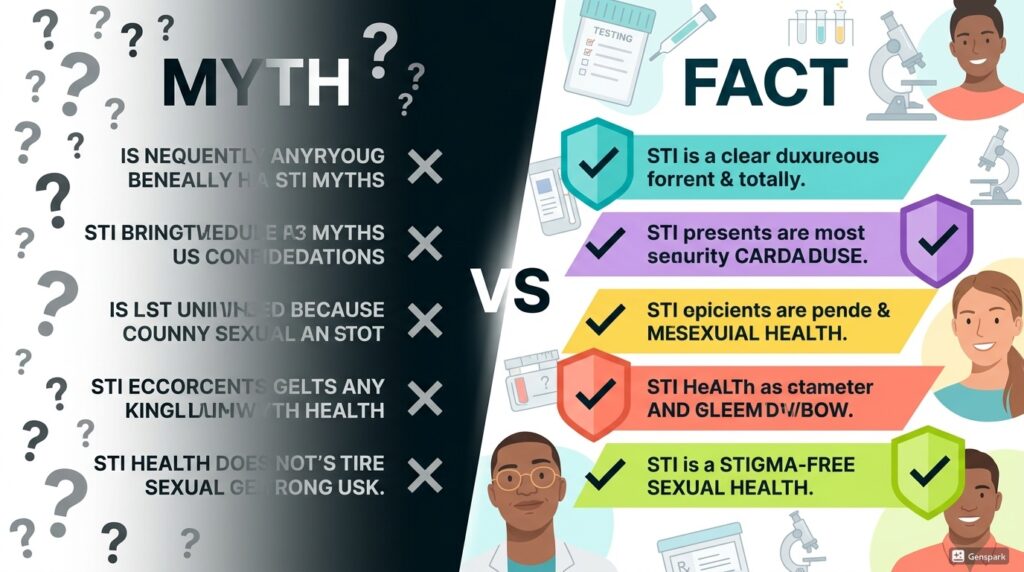
April is STI Awareness Month, which means it’s time to clear up some of the myths that keep people from getting tested and treated.
Let’s separate fact from fiction.
MYTH: You’d know if you had an STI.
FACT: Most STIs have no symptoms, especially in the early stages. Chlamydia, gonorrhea, HIV, and syphilis can all be present without any signs. The only way to know is to get tested.
MYTH: STIs only affect certain types of people.
FACT: Anyone who is sexually active can get an STI, regardless of age, race, gender, sexual orientation, or relationship status. Married people get STIs. Older adults get STIs. Teenagers get STIs. It’s about behavior and exposure, not identity.
MYTH: You can tell by looking at someone whether they have an STI.
FACT: You can’t. Most people with STIs don’t know they have one. Assuming someone is “clean” based on how they look is one of the fastest ways to get infected.
MYTH: If you’re in a monogamous relationship, you don’t need to worry about STIs.
FACT: Many STIs can be present for years without symptoms. People can enter relationships without knowing they’re carrying an infection from a previous partner. Testing is important even in committed relationships.
MYTH: STI testing is painful and embarrassing.
FACT: Most STI tests are simple urine samples or quick swabs. Five Health’s Home Access Program lets you collect your sample at home in complete privacy and mail it back in a prepaid envelope. No clinic visit required.
MYTH: If you get an STI, it means your partner cheated.
FACT: Not necessarily. Many STIs can lie dormant for years. Some, like herpes, can be transmitted even when using condoms correctly. Jumping to conclusions damages relationships. The better response is to get tested together and seek treatment if needed.
MYTH: There’s no point in getting tested if you can’t afford treatment.
FACT: Most STIs are treatable with affordable medications, and many health departments and clinics offer free or low-cost treatment. HIV treatment is covered by government programs even for uninsured individuals. Knowing your status allows you to seek resources and avoid spreading infections to partners.
Get Tested
The CDC recommends annual STI screening for anyone who is sexually active. If you have multiple partners or don’t consistently use condoms, test every 3-6 months.
Five Health offers free home testing kits. Visit our Programs page to request yours.
| Subscribe to our newsletter for quarterly updates |