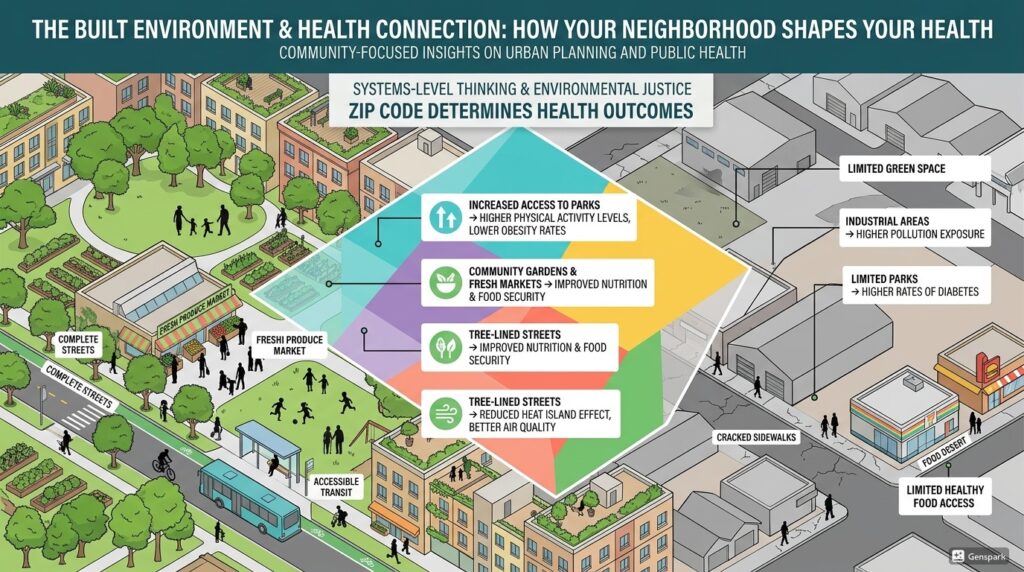
The neighborhood you live in affects your health as much as the genes you were born with. That’s not an exaggeration. It’s what decades of research shows.
Built environment is the term public health experts use to describe the physical spaces where we live, work, and play. It includes things like sidewalks, parks, grocery stores, air quality, public transit, and housing quality.
What Healthy Neighborhoods Look Like
Neighborhoods that support good health have:
- Sidewalks and bike lanes that make it safe to walk or ride
- Parks and green spaces where people can exercise and socialize
- Grocery stores with fresh, affordable produce
- Clean air and water
- Quality housing that’s affordable and well-maintained
- Public transit that connects people to jobs and services
- Community centers and libraries
- Good lighting and low crime rates
What Unhealthy Neighborhoods Look Like
Neighborhoods that make it hard to stay healthy often have:
- No safe places to walk or play outside
- Food deserts where the only nearby options are gas stations and fast food
- Poor air quality from highways or industrial areas
- Substandard housing with mold, pests, or lead paint
- Limited or no public transportation
- Fewer healthcare facilities
- Higher exposure to violence
The Health Consequences Are Real
People living in neighborhoods with poor built environments have higher rates of:
- Obesity and diabetes (when there’s nowhere safe to exercise and no access to healthy food)
- Asthma and respiratory disease (from poor air quality)
- Depression and anxiety (from chronic stress and isolation)
- Injuries and violence exposure
- Heart disease and high blood pressure
In Miami, life expectancy can differ by more than 10 years depending on which neighborhood you live in. That gap is driven largely by built environment factors.
What Five Health Is Doing
We can’t redesign neighborhoods overnight, but we can help residents navigate the resources that do exist and advocate for policy changes that improve built environments.
Our Community Connect platform identifies resources near you, and our Community Care Days bring health services directly to underserved neighborhoods.
Your zip code shouldn’t determine your health. Until we close that gap, we’ll keep working to level the playing field.
Take our SDOH assessment on Community Connect
| Subscribe to our newsletter for quarterly updates |