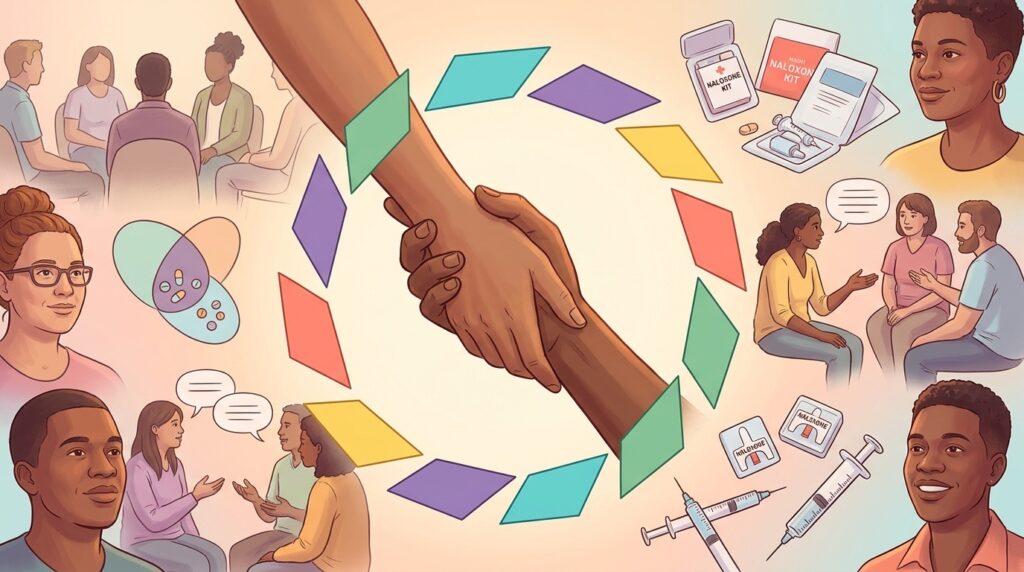
Substance use affects people in every community, at every income level, and in every age group. If you’re struggling—or if someone you love is—you’re not alone, and help is available.
This post is about resources, not shame.
Understanding Substance Use
Substance use disorder is a medical condition, not a moral failing. It changes brain chemistry in ways that make it extremely hard to stop using, even when someone wants to.
People use substances for lots of reasons: to cope with pain, trauma, or mental health issues. To fit in socially. Because they got prescribed opioids after surgery and developed dependence. Sometimes it starts recreationally and spirals.
Judging people doesn’t help. Connecting them to resources does.
Harm Reduction: Meeting People Where They Are
Harm reduction means providing services that reduce the negative consequences of substance use, even if someone isn’t ready to stop using completely.
Harm reduction includes:
- Naloxone (Narcan) distribution to reverse opioid overdoses
- Clean syringes to prevent HIV and Hepatitis C transmission
- Fentanyl test strips so people can test drugs for deadly additives
- Non-judgmental medical care and counseling
The goal is to keep people alive and healthy until they’re ready for treatment. You can’t recover if you’re dead.
Treatment Options
When someone is ready for treatment, options include:
Medication-Assisted Treatment (MAT): Medications like methadone, buprenorphine (Suboxone), or naltrexone reduce cravings and withdrawal symptoms while people work on recovery. MAT is the gold standard for opioid use disorder and dramatically improves outcomes.
Inpatient Rehab: Residential programs provide intensive treatment in a controlled environment, usually lasting 28-90 days.
Outpatient Treatment: Therapy and support groups while living at home. This works well for people with strong support systems and less severe use.
Peer Support Groups: Narcotics Anonymous (NA), Alcoholics Anonymous (AA), SMART Recovery, and other groups provide free, community-based support.
How to Find Help
- SAMHSA National Helpline: 1-800-662-4357 (free, confidential, 24/7, English and Spanish). They’ll connect you with local treatment providers and support services.
- Miami-Dade Addiction Services: Call 211 for referrals to local programs.
- Five Health Resource Navigation: We can help you find treatment options, apply for sliding-scale services, and connect with peer support. Email info@5-health.com.
If You Love Someone Who’s Struggling
You can’t force someone into recovery, but you can:
- Learn about substance use disorder so you understand what they’re facing
- Set boundaries that protect your own wellbeing
- Avoid enabling behaviors (like giving money or making excuses for them)
- Connect them with resources when they’re ready
- Take care of your own mental health—Al-Anon and Nar-Anon support families of people with substance use issues
Recovery is possible. It looks different for everyone, and it rarely happens in a straight line. But with the right support, people can and do rebuild their lives.
Call or text the SAMHSA National Helpline at 1-800-662-4357
| Subscribe to our newsletter for quarterly updates |