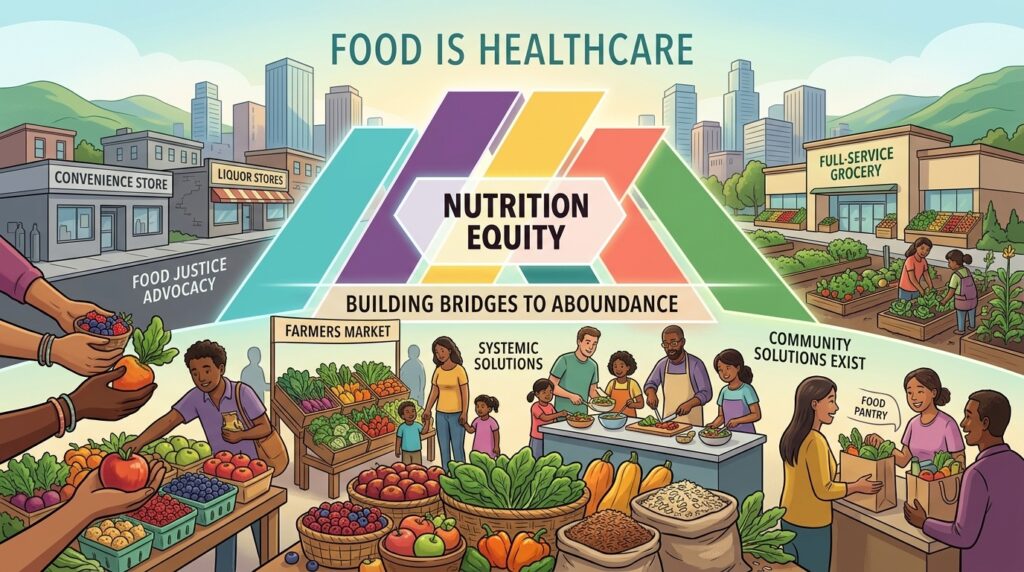
Good nutrition is essential for health. Everyone knows that. But not everyone has equal access to healthy food. That’s where social determinants come in.
Food Insecurity in Miami
Food insecurity means not having consistent access to enough nutritious food. In Miami-Dade County, approximately 17% of households experience food insecurity. For households with children, that number jumps to 23%.
Food insecurity isn’t just about hunger. It’s about having to choose between:
- Paying rent or buying groceries
- Filling prescriptions or feeding your family
- Buying fresh produce or cheaper processed foods that last longer
Food Deserts
A food desert is a neighborhood where residents don’t have easy access to affordable, healthy food. In Miami, many low-income neighborhoods have no full-service grocery stores within walking distance or public transit reach.
What they do have: gas stations, convenience stores, and fast food. These places sell food, but not the kind that keeps you healthy.
The Health Consequences
Food insecurity and poor nutrition lead to:
- Higher rates of diabetes and obesity
- Increased heart disease and high blood pressure
- Weaker immune systems and more frequent illness
- Developmental delays in children
- Mental health issues (chronic stress, depression)
When healthy food is expensive or hard to get, people eat what they can afford and access. That’s not a personal failing. It’s a systems problem.
Food as Medicine Programs
Some healthcare systems and community organizations now prescribe healthy food like medicine. Programs include:
- Produce prescriptions: Doctors write “prescriptions” for free fruits and vegetables that patients redeem at farmers markets or partner stores
- Medically tailored meals: Free home-delivered meals designed for people managing chronic diseases
- Food pharmacies: On-site food distribution at health clinics
Early research shows these programs improve health outcomes and reduce healthcare costs.
Resources Available Now
Food Banks and Pantries:
- Feeding South Florida: Multiple locations, call 954-518-1818
- Farm Share: Mobile distributions throughout Miami-Dade, call 305-258-4222
- Local churches and community centers: Many offer weekly or monthly food distributions
SNAP (Food Stamps):
Apply at myflfamilies.com or call 1-866-762-2237. Many working families qualify.
WIC (Women, Infants, and Children):
Provides food assistance for pregnant women, new mothers, and children under 5. Apply at miamidade.gov/health
School Meals:
All Miami-Dade public school students receive free breakfast and lunch, regardless of income.
Finding Help:
Five Health’s Community Connect app identifies food resources near you based on your location and needs. Visit 5-health.com/connect or call us at info@5-health.com for navigation support.
Food is healthcare. If you need help accessing it, resources exist.
Find food resources near you on Community Connect
| Subscribe to our newsletter for quarterly updates |